

You’ve sent the emails. You’ve followed up. You’ve tried different subject lines, different angles and different days. And still, the silence.
So you send more. And you should. Volume matters in outbound. But volume can’t fix a message that was never built around the person receiving it.
That’s what this guide does. Instead of giving you another outreach formula, it puts you inside the buyer’s head. What they see when your message lands, what makes them delete it and what makes them stop. Because once you understand what the buyer is experiencing, what you need to do differently becomes obvious.
Here’s what it looks like from their side.

Before I’ve read a single word, I’ve already decided what it is.
Your name; do I know it? Your subject line; have I seen this before? Your first sentence; if it opens with ‘I’, I already know what’s coming. You’re going to tell me who you are, what you do and what you’d love to discuss. I’ve read that message hundreds of times. I don’t need to read it again.
The filter isn’t conscious. It’s pattern recognition built from years of outreach that was never really about me. My inbox has taught me to scan fast and decide faster. Most messages don’t make it past the first line.
What makes me slow down is a question that lands close to something I’m genuinely dealing with. Not a broad industry question I’ve seen repackaged a dozen times. I want something that sounds like you’ve actually been paying attention to my business. The friction that’s costing time. The gap that’s not closing. When a message gets that close, I stop. I read it properly. And I start wondering how you knew.

I know when someone is chasing me. I can feel it in the message.
The first email is fine. The second is expected. By the third, the tone has shifted. There’s an urgency in it that has nothing to do with my situation and everything to do with yours. The follow-ups get shorter, more pointed. ‘Just circling back.’ ‘Wanted to keep this top of mind.’ ‘Did this get buried?’ Each one tells me that you need this more than I do.
That’s when I stop engaging entirely. Because nothing about this sequence has given me a reason to respond. You haven’t shown me you understand my problem. You’ve shown me you have a target to hit.
Desperation doesn’t close deals. It confirms that the meeting would be about your agenda, not mine. So I don’t take it.

The issue isn’t effort. Most sellers are putting in the effort. The issue is direction. Outreach that centres the seller, their product, their pitch, their ask, gives the buyer no reason to engage. The buyer’s situation is assumed, not investigated. So it reads like every other message and gets treated like every other message.
The fix is knowing where the friction actually lives for this specific person. First, scout. Ask a question that tests a hypothesis about their situation rather than pitching into a void. Second, when the hypothesis lands, probe. Connect the symptom to its cost so the problem becomes concrete. And then offer a meeting.
Most sellers skip both and go straight to the pitch. That’s why their emails get opened and ignored.
So, for your next outreach, avoid the following mistakes:
- Talking about the product before the problem is fully on the table.
- Sticking rigidly to a question list instead of following what the prospect actually says.
- Framing the meeting as a small ask rather than a meaningful next step.

Good outreach surfaces something the buyer already knew was there but hadn’t said out loud. No amount of follow-up cadence or subject line testing replicates that. It comes from doing the work to understand their situation before you ask for their time.
Stop leading with what you need. Start with what they’re carrying.
More articles
Keep reading.
16 September 2026
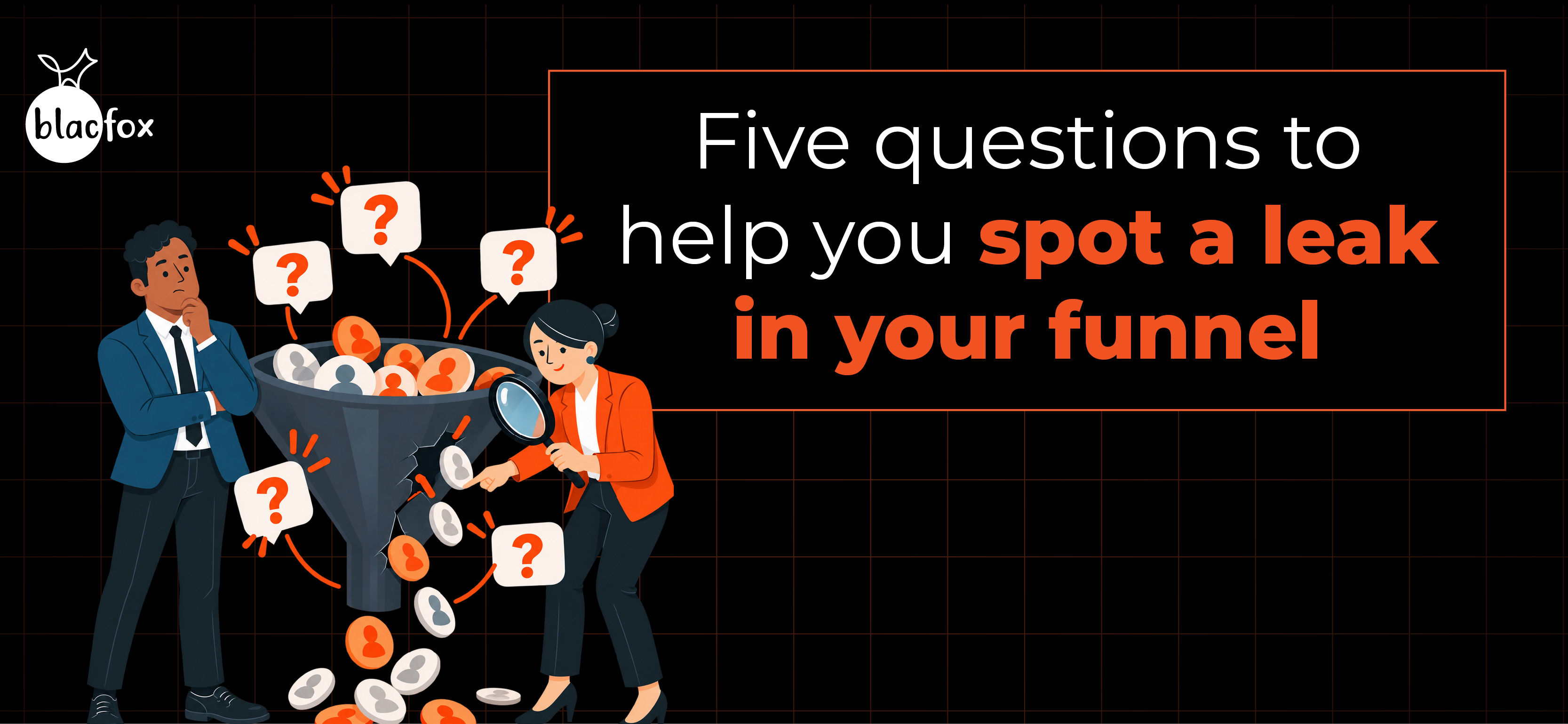
Five questions to help you spot a leak in your funnel
Most B2B funnels lose 87% of their leads. Five questions to find where yours is leaking, from targeting to the handover to Sales.

19 August 2026
How to Leverage Your AWS Funding
Find out how AWS Market Development Funds work, which marketing activities they cover, and the setup steps to complete before you submit a claim.

19 August 2026
Microsoft just rewrote the rules of the partner model
FY27 scores Microsoft partners every month on client usage. Learn what a slipping score costs you and what to do about it now.
Talk to us about a deal, or about how you are positioned.
If something here raises a question about a deal you are working on, bring it to us. The same goes for how you are positioned, how you stand apart from competitors or how to get the market to notice what you offer. We will listen first, then tell you plainly whether we can help.