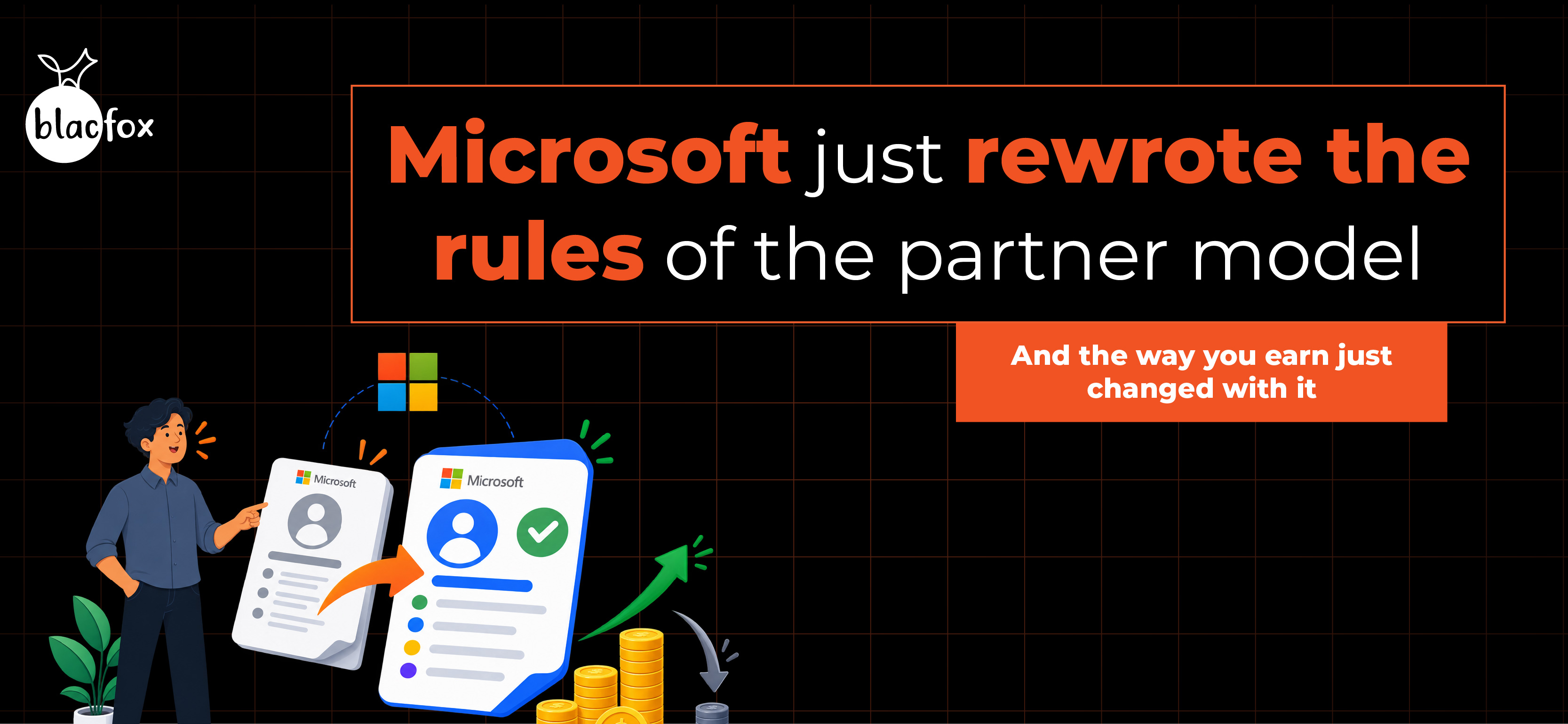
The Microsoft partnership you built may not survive FY27.
For years, selling licences, managing renewals, and expanding your client base was enough to build a successful Microsoft partnership. But FY27 added something that most partners were never managing. And that gap requires a fundamental change to your business model.
Here’s what you need to know.

The old model was simple. Microsoft rated your partnership through your Partner Capability Score (a measure of performance, skilling, customer success, and growth). You checked it once a year, cleared the threshold, and moved on. The more clients you held, the more you earned. Regardless of whether they were growing, shrinking, or barely using what they paid for.
FY27 changed that. Microsoft now pulls usage data directly from your clients’ tenants every single month and feeds it into that same score. Active Copilot users. Configured security features. Power Automate workflows that are actually running. These are the numbers Microsoft is watching now.
Which means the clients who renew without ever going deeper into the suite are no longer just a missed upsell. They are a monthly drag on the score that determines what your partnership is worth.
And if enough of your book looks like that, the passive income your partnership was built on is gone. Replaced by a model that only rewards partners whose clients are actually growing.

The consequences are not small.
Your Partner Capability Score needs to stay above 70 points to hold your Solutions Partner designation. Think of the designation as your access card. It is also the thing that unlocks everything that makes the Microsoft partnership worth having.
Let’s start with the money. Designated partners qualify for higher incentive rates and access to Advanced Specialisation funding programmes worth between $50,000 and $500,000 or more annually. The gap between 69 points and 70 is an entire revenue tier.
Co-sell is where you feel it most. As a designated partner, Microsoft’s own field sellers are actively working deals alongside you. Putting your name in front of enterprise buyers you would never have reached independently. Lose the designation and you come off that list.
It gets worse. Drop below Microsoft’s revised criteria and you lose direct-bill status. Meaning you can no longer source licences directly from Microsoft. You go through a distributor instead, and with that goes your control over how you price and deliver to clients.
The part that should keep you up at night is that Microsoft does not warn you when your score starts moving. Every month, it automatically pulls usage data from your clients’ tenants, without a notification. This data includes Copilot licences nobody activated, security features left untouched, and Power Automate flows that were never built.
The renewal keeps arriving and everything feels fine. Until it isn’t. And by then, months of data have already made the case against you.

Recognise that this is not a campaign problem or a scoring technicality. Microsoft has changed what the partnership is worth. And what determines that worth is no longer what you sell. It is what your clients do after they buy. That has to live at the centre of how your business operates.
Start by pulling adoption data from Microsoft 365 Admin Centre and Partner Center and mapping it against your Partner Capability Score. Find the clients with the lowest usage, those are the ones costing you the most right now.
Then build a monthly re-engagement motion around them that makes usage a commercial conversation, not a support call. Microsoft scores you every month. Your business should move on the same clock.
The partners who do this are building the business FY27 was designed to reward.

Most Microsoft partners are losing their standing for one reason: adoption was never made a commercial responsibility.
And until FY27, nobody had to.
At Blacfox, we help Microsoft partners build the marketing motion that changes that. Because a client who renews but never uses what they bought is not just a missed opportunity. They are a liability in the partnership you have spent years building.
And your Partner Center score has already started keeping track.
More articles
Keep reading.

2 November 2026
What buyers actually think when your outreach lands
See outbound outreach from the buyer’s side: what gets your message deleted, why desperate follow-ups backfire and how to earn a reply.
16 September 2026
Five questions to help you spot a leak in your funnel
Most B2B funnels lose 87% of their leads. Five questions to find where yours is leaking, from targeting to the handover to Sales.
19 August 2026
How to Leverage Your AWS Funding
Find out how AWS Market Development Funds work, which marketing activities they cover, and the setup steps to complete before you submit a claim.
Talk to us about a deal, or about how you are positioned.
If something here raises a question about a deal you are working on, bring it to us. The same goes for how you are positioned, how you stand apart from competitors or how to get the market to notice what you offer. We will listen first, then tell you plainly whether we can help.